
Six years ago I wrote a post about how Dungeons & Dragons makes you better at your job - and I'm hoping today to convince you that this hobby has done nothing but appreciate in value.
Back then I was a player. My first character was Rhorash, an orphan who was hellbent on summoning an evil 5-headed dragon goddess named Tiamat with my long lost brother, Dragomir. I played alongside Tree, a barbarian named for his habit of smashing things with a tree, and Backpack, a lil' guy that liked hanging out in Tree's backpack. I still think that post holds up! The three lessons were empathy, diversity, and leaning into ambiguity - all still just as important now if not more so.
What I didn't have in 2020 was any idea what it's like to run the game. These days I'm the Dungeon Master for a homebrew campaign I built from scratch, and I also run The Growth Den, which means I'm juggling five clients at once with a bench of AI agents doing a lot of the heavy lifting. And I'll tell you what, those are largely the same job. So this is the 2026 version of that post. The same three lessons, told from behind the DM screen.
Fair warning, this is still a very nerdy post.
1. Empathy is still the whole game, and the machines can't do it for you
In the original I wrote about playing Rhorash and having to ask myself questions like "how does his background change how he treats authority figures? Is he slower to trust? Fiercely independent because he's only ever had himself? Does he eat meat or not?" The point was that once you practice that on a made-up character, you start doing it with real people. Instead of rushing to judge why someone did something, you ask why they might be acting that way.
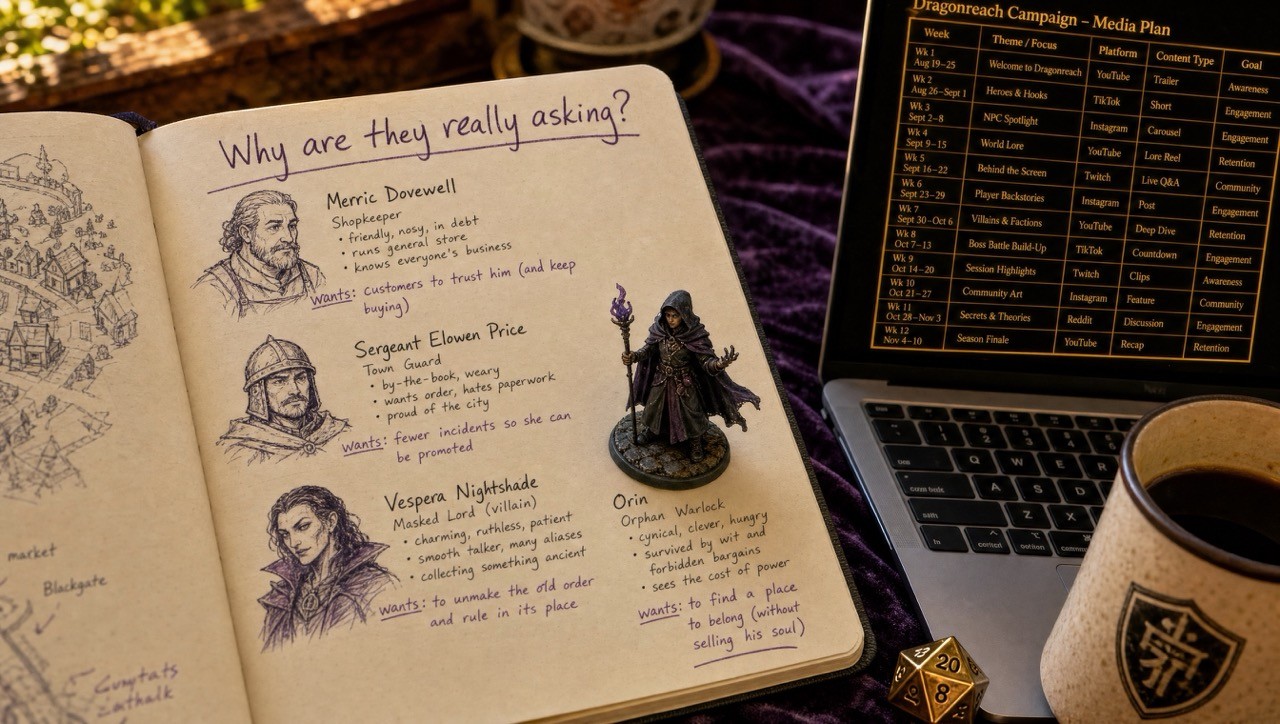
As a DM you don't get to play one character. You play all of them. Every shopkeeper, every town guard, every villain in the campaign is yours, and if you don't know what each of them is motivated by before the players walk into the room, the world feels flat and the players walk all over you. I learned this the hard way in my first couple of sessions. The moments that landed were the ones where a character and an NPC (me) connected - even (especially?) if the situation was absurd. The comedy only works when the world plays it straight.
The business version of this hasn't changed in six years, but the stakes have been raised with a little thing called AI.
When a client asked for "more ads" six years ago, the lesson was to ask why they're asking. Today I can hand Claude a brief and get a full media plan back in four minutes, and it will be a perfectly reasonable media plan for the wrong problem, because the model only knows what I told it. It doesn't sit in the meeting and notice that the founder is nervous about a board deck next week and "more ads" actually means "I need a number to go up before Thursday." That step, the "why are they really asking" step, is one major part of the job that still has to be a human. When I get lazy about it, the work regresses to the mean, no matter how good the tools are.
2. The definition of a "party" is fundamentally changing
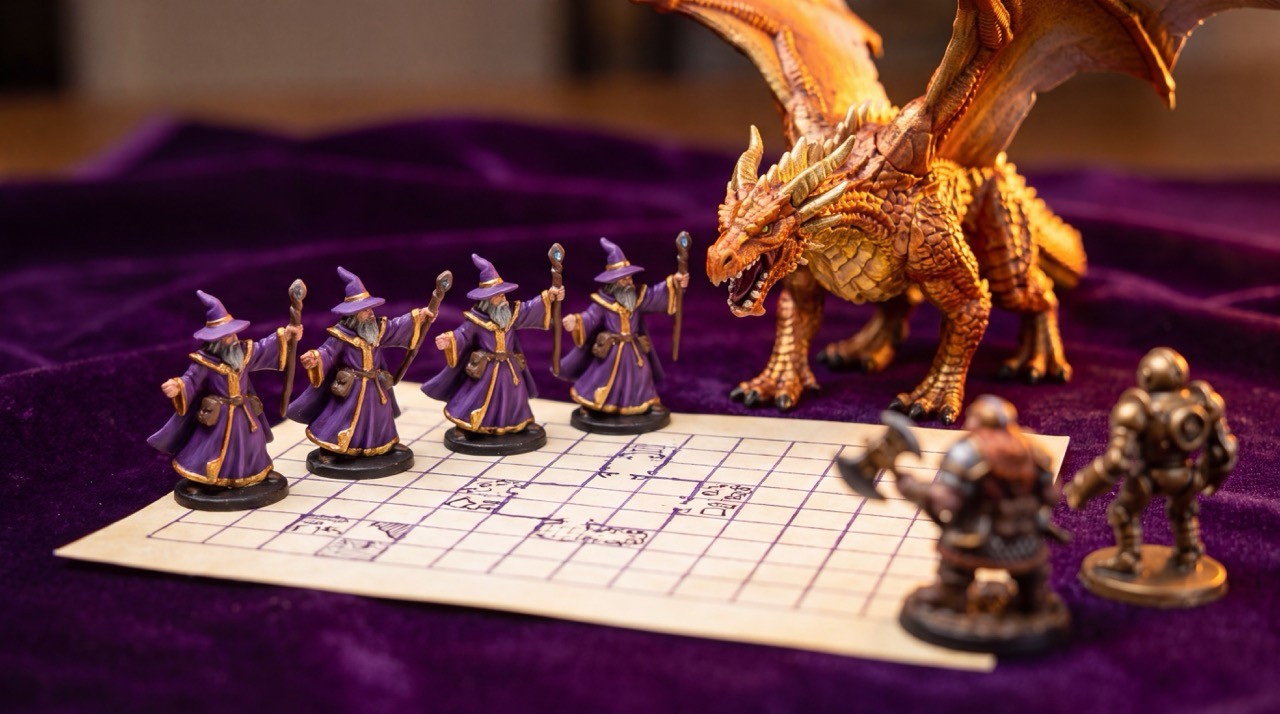
One example I made in my last article was a story of four dwarves. Picture them arriving at the dragon's lair, heavy armor, axes out, ready to go, only to find out a wizard enchanted the fortress to float 200 feet in the air. If only they'd brought a wizard. Now flip it, four wizards in robes walk in and come face to face with the dragon, and you bet they'd love some armored dwarves about now. Diverse teams are better teams. I cited the research then and I'd cite it again.
What I understand now as a DM, and what is changing rapidly in the business world, is that you both build the world the fit the party and vice versa. When I designed a battle arena for my current campaign, every fight was tuned for five level 4 characters with the specific mix of classes at my table. When deciding on classes for a campaign of "Curse of Strahd", a very play-it-serious vampire tale, the party will likely self-select into more diverse battle ready players - obviously while still keeping the fun as part of it.
That's exactly what fractional work is. My "party" changes with every client. At one I'm the wizard, at another I'm the dwarf with the axe, and the trick is being straightforward and transparent with clients about which ones they need and going and finding the rest.
In 2026 - the party now includes agents, and the diversity lesson applies to them too. If you ask one model for ten ad ideas, you get ten variations of the obvious one. Four wizards, four wizard answers. My creative loop now starts with a Claude skill I wrote called Angle Storm that forces angles to actually be different from each other, then a Focus Group of personas, each one running as its own agent, that react to every angle independently. I loop that until one of the personas fights for an angle, and then that's the one that goes to Higgsfield to become a real ad. The tools aren't the smart part. The smart part is refusing to let a homogenous party walk into the dragon's lair, whether that party is people or machines.
3. The door is still gold, and the druid still turns into a housefly
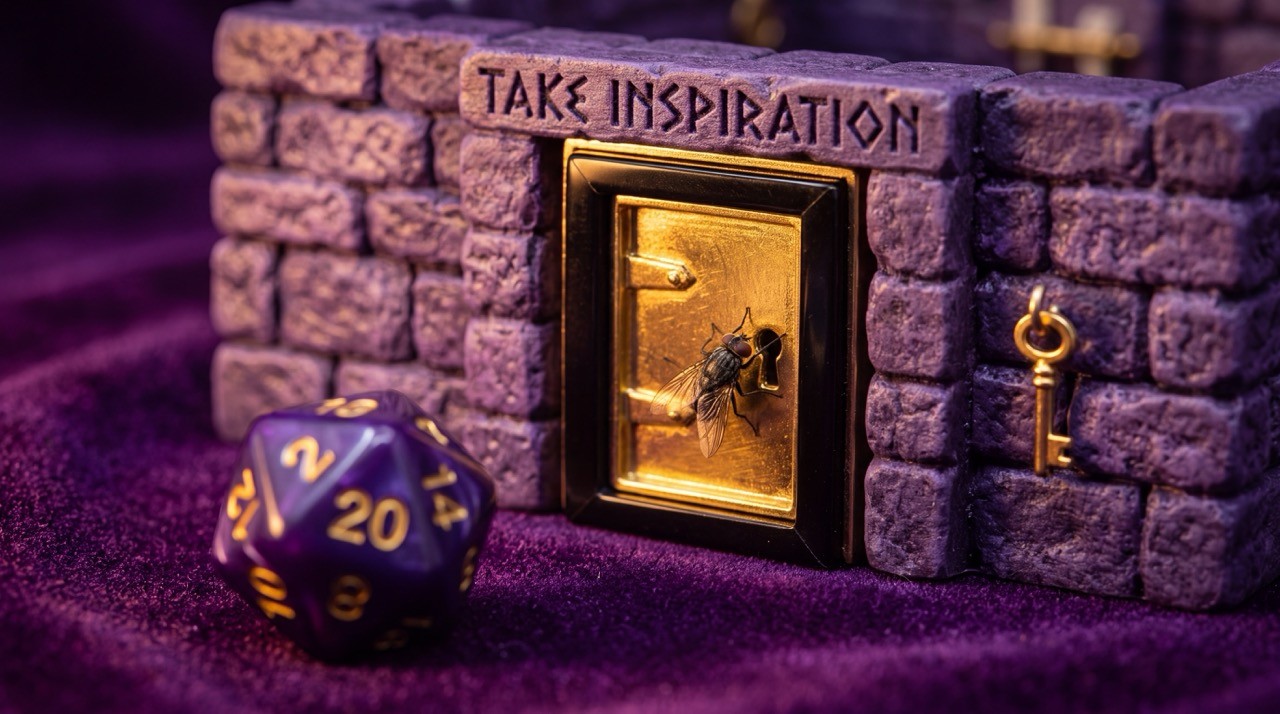
The ambiguity lesson from 2020 was a locked door. Solid gold, onyx trim, and the party has to figure out how to get through. My prepared answer was that the key was hanging ten feet to the right. Instead, the druid casts Wild Shape, turns into a housefly, flies through the keyhole and opens it from the other side. And the right call as a DM is to say that was the way all along. "How did you know? Great job, take Inspiration."
Now I'm the one whose prep gets ignored, and it happens every single session. I built an entire mine system under the town and a set of ruins on the mountain above it, and the party might not see either of them for months. I have a Dragonborn fighter at my table named Bearclaw whose entire vocabulary is the word "Bearclaw," and he is currently off in the mountains by himself looking for a graveyard after gorging himself on Drax the Lizardfolk's bearclaws. That was in none of my notes. It's also genuinely hilarious.
Two things saved me from spiraling with this not running "to plan." The first is that I built the campaign around a bulletin board of quests instead of a single plot. The players pick the job, so they have real agency, and I control the pacing because I decide what goes on the board. The second is that Claude keeps a living DM notes document with a recap after every session. I don't run the game from memory anymore - these notes are live updating and help me have a second brain.
If you're running a business right now, especially one with AI in the loop, that should sound familiar. The old business example was a client asking for a different programming language six weeks into a ten week project. The 2026 version is an agent solving something sideways, or a client's whole priority list flipping on a Tuesday, or a tool doing something you never scripted and it turns out to be better than what you scripted. The DM move is the same as it ever was. Keep the end goal, say yes to the housefly, and give out the Inspiration. The more I build with AI, the more my job looks like DMing. I don't write every ad anymore. I set up a world where good things can happen and then I adjust to whatever the party does with it.
And the reason I can hold five clients in my head at once is the same reason I can hold a campaign in my head. It isn't my memory. It's the notes.
4. The lesson I didn't know existed: Session Zero
Here's the one that wasn't in the original, because as a player I'd never even heard of it yet.
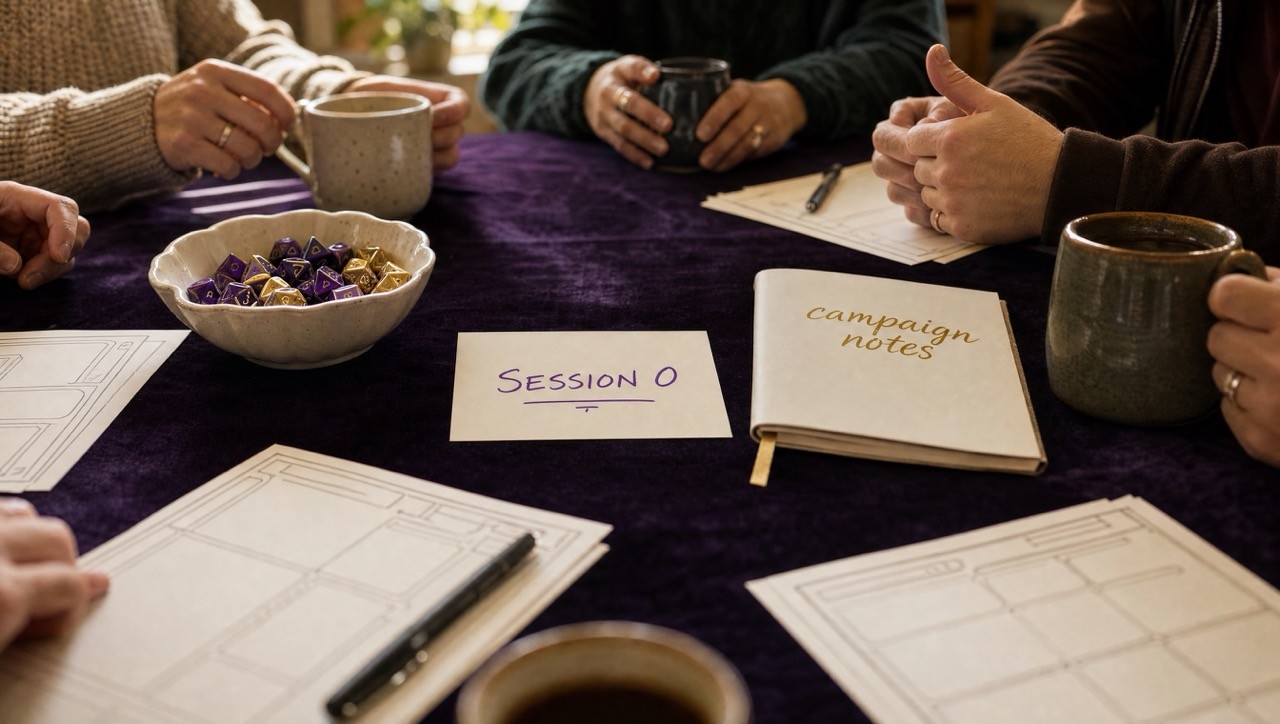
Session Zero is the session before the campaign starts. Nobody rolls dice. You sit around the table and agree on what kind of game this is going to be. Mine is high fantasy heroic with a ton of parody and comedy, stakes played straight, humor everywhere, and yes, mostly jokes that would not survive a corporate HR review (If you want them, I may or may not be hosting those on a separate site... Be warned, they are VERY nsfw. Just ask for the link). You agree on what's off limits. You find out what each player wants their character to get out of this, and you agree on how you'll handle it when somebody isn't having fun. It has become standard practice at most tables over the last few years, and most things that ever go wrong later on usually traces back to something we never talked about at the start.
Every client engagement needs a Session Zero, and almost nobody does one. We're all in a hurry to start delivering value. But before anyone opens Ads Manager, I want to know what winning looks like in 90 days, what's off the table, who actually makes decisions, and how we're going to talk to each other when something breaks - in a conversation, not a contract.. Every engagement I've had go sideways went sideways over something we should have said to each other on day one.
The part I'd add for 2026 is that your tools need a Session Zero too. Before an agent writes a single word for a client, it needs the campaign notes. Who this client is, what we've already tried, what we will never do, how the brand talks, what the founder is scared of. When people complain that AI content is slop, most of the time what they're describing is a model that skipped Session Zero. Somebody asked it to make something out of nothing and it did exactly that. My living DM notes doc is Session Zero for the machines. It's the reason the stuff that comes out of my stack sounds like me and my clients instead of sounding like the godforsaken hellscape known as the internet.
That's the whole "adding humanity back in" thing I keep talking about. It isn't magic. It's the notes, the conversation nobody wanted to have, and a human sitting in the meeting noticing why the founder is nervous.
So, who's in?
Six years later, my pitch is the same. Who wants to play D&D? And I get it, for a lot of you that is still way too far up the nerd scale. But if you run a team, a client roster, or a pile of AI agents, you are already the Dungeon Master. You just haven't admitted it yet, and the game gets a lot more fun once you do.
If you play, tell me about your character in the comments. I mean that! I want to hear about the Saylor Twifts and the Smasher the Bugbears and Sydney the lactose intolerant barbarians out there. And if you're in St. Louis and have never tried it, my table always has an open seat for you